
Inside My Studio Systems: How I Keep Creativity (and Sanity) Intact
People often assume creative work is all just painting pictures and inspiration — but honestly, it’s also a lot of logistics. Layers of artwork, feedback loops, file naming (and renaming), juggling multiple clients, and finding time to actually paint.
I’ve learned that if I don’t have systems in place, everything else — creativity included — starts to unravel. So I thought I’d share a little of how I manage it all in my studio. Nothing fancy or over-engineered, just what’s helped me stay organized and creative at the same time.
1. The Big Picture View
Every Sunday, I take fifteen minutes to look ahead at the week. I note what’s due soon, who’s waiting on feedback, and where I might realistically fit in new creative work.
It’s not a strict schedule — more of a mental map. I’ve learned, and am still trying to learn that creativity doesn’t stick to a spreadsheet, but having structure around it helps me show up for it consistently.
(This is also when I block out time for my pattern library work — even if it’s just an hour to revisit older pieces or develop something new.)
2. The Client Workflow
For each client project, I have a repeatable checklist — brief received, concept sketch sent, feedback round one, colour approvals, final delivery, invoice.
It sounds simple, but that repetition keeps me sane.
Having clear steps means I can focus on the art without constantly worrying I’ve missed something.
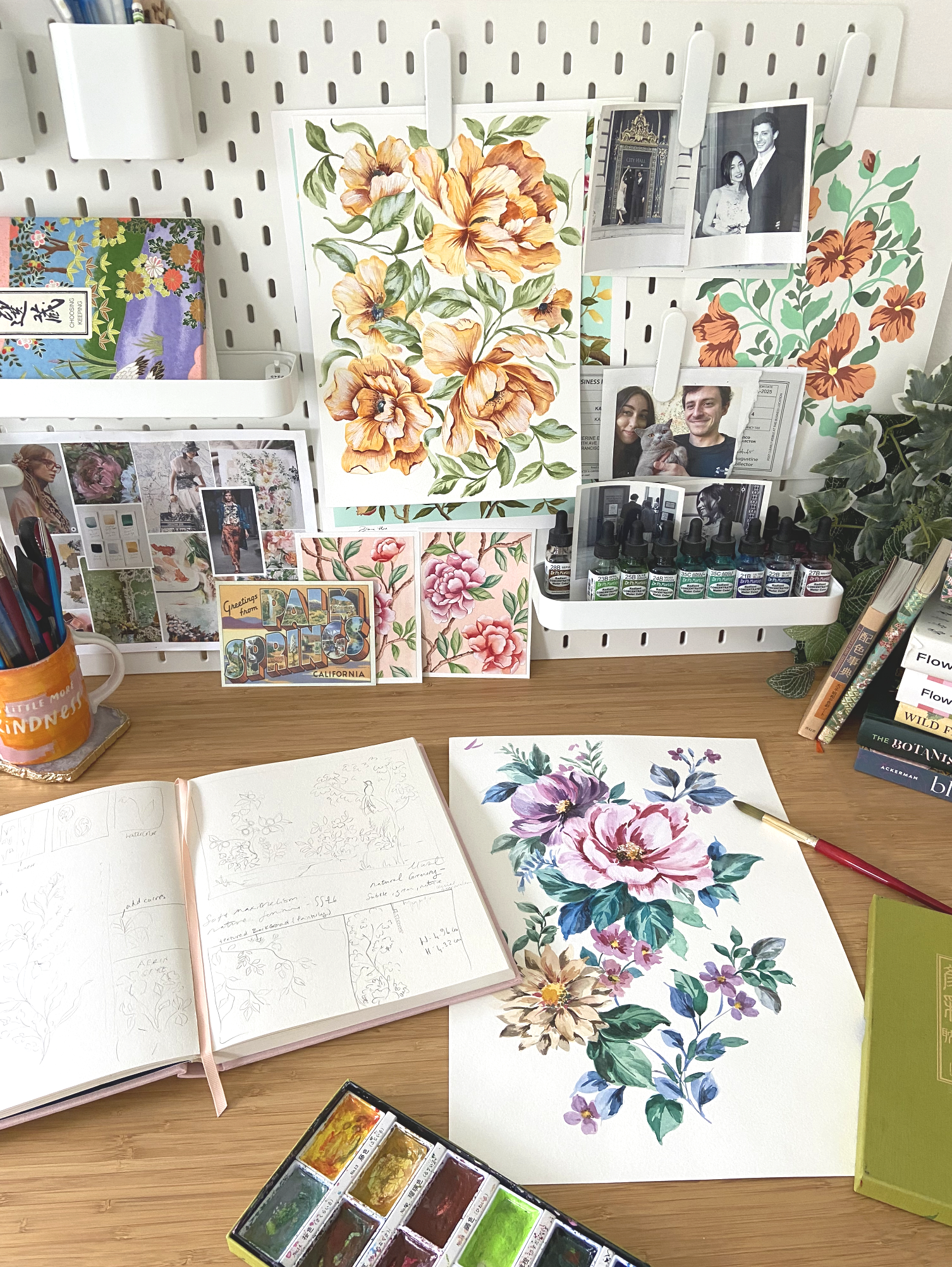
I’ve also stopped trying to manage everything in my inbox. Each client has their own folder, and I move files immediately once a project is approved. (My past self used to dig through endless “final_final_v3.psd” files at midnight — never again.)
3. Creative Time Is Scheduled Time
When you’re a studio owner it’s easy to let admin take over.
I try and schedule a time for pure creative work- this one’s still a work in progress though. I guess what comes with being a creative is, it’s hard to ‘schedule’ a time for painting when you’re not feeling particularly creative. I’ve learnt over time that my best painting hours are either first thing in the morning, or in the evening. This is a big one- learning when you work best, or worst (hello 2pm).
Even if I only have an hour, I make sure it’s protected. That’s when I can experiment with new motifs, explore colour ideas, or rework an existing print for my library. It keeps my creative muscles moving and stops everything from feeling purely reactive.
4. Notes, Notebooks, and Notion
I use a mix of old-school and digital tools, I know there’s a million automation tools out there, but to be honest I find them more complicated than useful. I like to have my projects written down in front of me (either hand written or stickies), then I use Miro as a visual guide for each project or client.
5. The Debrief Habit
After each big project wraps, I take a few minutes to jot down what worked, what didn’t, and what I’d change next time.
It’s easy to jump straight into the next thing, but that pause helps me refine my process — and it’s usually where the best ideas for new designs (or pattern library pieces) come from.
A Quiet Kind of Order
I used to think structure would make me feel boxed in. But the opposite has been true, having simple systems in place gives me more space to be creative.
It turns the chaos into something I can actually enjoy, and it lets me put more energy into the part that matters most: painting and designing.